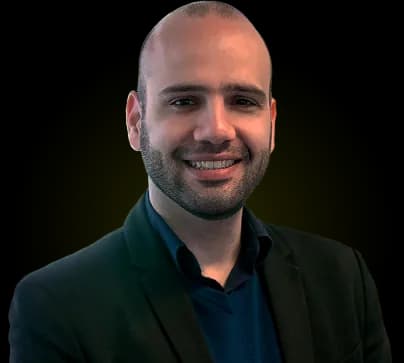
Dr. Ali Khademhosseini stands as one of the most influential voices in modern bioengineering and regenerative medicine. His journey, spanning continents, disciplines, and sectors is marked by innovation, adaptability, and an unrelenting drive to turn research into real-world solutions. From his early beginnings in Iran to leading transformative scientific initiatives in the United States, Dr. Khademhosseini's path offers a compelling blend of academic excellence, entrepreneurial insight, and visionary thinking.
Early Life and Academic Roots
Born in Iran, Dr. Khademhosseini moved to Canada at the age of eleven. The transition, though challenging, laid the foundation for a global perspective that would later define his professional ethos. He pursued chemical engineering at the University of Toronto, where his curiosity about emerging technologies and desire to make a broader impact pushed him toward bioengineering.
This pivot became transformative during his doctoral studies at the Massachusetts Institute of Technology (MIT), where he worked under the mentorship of Professor Robert Langer, a pioneer in tissue engineering. The mentorship not only deepened his expertise in biomedical research but also modeled what it means to lead with scientific integrity and vision.
A Bridge Between Academia and Industry
After completing his Ph.D. in 2005, Dr. Khademhosseini began his academic career at two of the world's most prestigious institutions, MIT and Harvard. His research primarily focused on biomaterials and tissue engineering, with the aim of designing medical solutions that could be directly applied in clinical settings.
In 2017, seeking broader opportunities to translate his research into action, he relocated to Los Angeles. There, he briefly joined UCLA before launching a new and independent research hub; the Terasaki Institute for Biomedical Innovation. This institute was established to break the conventional mold of academia and bring scientific solutions directly to the public by bridging research, innovation, and commercialization.
Interestingly, Dr. Khademhosseini also spent a year working at Amazon. His time in the corporate world gave him rare insights into operational efficiency, large-scale infrastructure, and organizational strategy; lessons he would later integrate into managing the Terasaki Institute. His experience underscored how scientific institutions can benefit from adopting certain industry practices to be more agile, goal-oriented, and impactful.
Translational Science: From Ideas to Impact
A recurring theme in Dr. Khademhosseini's career is his focus on translational science; an approach that prioritizes real-world application from the very start of a research project. He has often criticized traditional academic structures for prioritizing publications over problem-solving, arguing that many groundbreaking discoveries remain trapped in academic silos without reaching the people who need them most.
At the Terasaki Institute, he has cultivated a culture where research is tightly aligned with real-life challenges, and success is measured not only by scholarly impact but also by practical implementation, whether through medical devices, new therapies, or biotech startups.
Lab-Grown Meat: Innovation with Environmental Benefits
Among his many groundbreaking projects, one that stands out is his work on cell-based meat. Unlike plant-based meat alternatives, this approach uses actual animal cells cultured in a lab to produce meat that is both sustainable and biologically authentic. The environmental benefits are significant: reduced land use, lower greenhouse gas emissions, and decreased water consumption. Now operating as a standalone company, this project represents a successful case of turning early-stage research into a viable, market-ready product.
Toward Regenerating Human Organs
Currently, Dr. Khademhosseini's efforts are concentrated on an ambitious but crucial goal; engineering complex human organs such as the liver and heart. These organs present immense challenges due to their intricate vascular systems and the necessity to function immediately upon transplantation. By employing 3D bioprinting and advanced materials science, his team is developing constructs that could one day replace damaged organs and transform the landscape of organ transplantation.
Real Clinical Impact: From Concept to Hospital Use
One notable achievement from his lab has already made its way into the clinical world: a specialized material developed to prevent internal bleeding or aneurysm rupture. This project went through rigorous design, animal testing, and regulatory approval before being adopted in hospital settings. Such success stories highlight not just technical excellence but also the perseverance required to navigate the long and often unpredictable journey from concept to clinical use.
Dr. Khademhosseini acknowledges that the majority of scientific projects fail to reach the finish line, with only about one in ten making it to real-world application. This reality makes resilience and long-term commitment essential traits for any aspiring researcher.
Personalized Medicine and the Future of Healthcare
He is a strong advocate for personalized medicine, an approach where treatments are customized to an individual's genetic and biological makeup. With technologies like genome sequencing, patient-derived cell cultures, and organ-on-a-chip systems, it's now possible to pre-test how drugs will affect a specific patient. This could dramatically increase treatment effectiveness and reduce adverse reactions, making healthcare more precise and efficient.
Harnessing Data and Artificial Intelligence
One of the pressing challenges in modern biosciences is the sheer volume of biological data generated from genomic sequences to protein profiles. Dr. Khademhosseini sees artificial intelligence as a critical tool in decoding this complexity. By integrating AI into tissue engineering and drug development, researchers can identify patterns, predict outcomes, and optimize interventions with unprecedented accuracy.
He's especially interested in using AI to intervene at the molecular level, envisioning applications that range from treating chronic illnesses like diabetes to regenerating damaged tissues through smart cellular manipulation.
Words of Advice and a Call for Unity
For students and early-career researchers, Dr. Khademhosseini emphasizes the importance of genuine passion. Scientific research, he notes, is not for the faint-hearted; it demands resilience, intellectual rigor, and a high tolerance for failure. He urges young scientists to aim for excellence in both coursework and lab work, publish with purpose, and commit to their path with seriousness and integrity.
Though he maintains deep ties to the Iranian community, Dr. Khademhosseini believes in transcending national boundaries. He advocates for viewing people as individuals rather than through the lens of nationality, encouraging more inclusive and constructive global dialogue. He also calls for stronger collaboration within the Iranian diaspora and greater engagement with the broader scientific community.
Conclusion: A Life Devoted to Real-World Impact
Dr. Ali Khademhosseini has dedicated his career to making science useful, not just as a theoretical endeavor but as a force for improving human life. Whether in the form of life-saving medical materials, sustainable food solutions, or futuristic tissue engineering, his work bridges the gap between the lab and the real world.
His story is a powerful reminder that with vision, persistence, and a willingness to challenge outdated systems, science can become not just a tool for discovery, but a catalyst for human progress.